Table of contents
Red and Blue Notices travel fast, but their real-world impact often moves at the speed of domestic law, politics, and paperwork, and that gap is increasingly visible as cross-border cases collide with privacy rules, court backlogs, and wary immigration systems. Interpol insists its notices are not international arrest warrants, yet many travelers only learn the difference at a check-in counter or during a routine passport scan. So why do some people get detained immediately while others pass through, and what determines whether a notice triggers action at all?
Notices are alerts, not arrest warrants
Here is the first misunderstanding that drives so many headlines, and just as many legal surprises: an Interpol notice is an information tool, not a court order. Interpol, headquartered in Lyon, circulates requests and warnings between police services in 196 member countries, but it does not have agents who arrest people, it does not prosecute, and it does not compel any state to act. A Red Notice, the best known, signals that a person is wanted by a national jurisdiction, typically for prosecution or to serve a sentence, and it asks other countries to locate the person and, where permitted, provisionally arrest them; it does not itself create the legal authority to do so.
The distinction matters because arrest powers come from national law, and those laws vary sharply. In some countries, a Red Notice can be treated as a sufficient basis for a provisional arrest while extradition paperwork catches up, but even there, judges may require additional documents, such as a domestic warrant, a translated charging decision, and proof of identity. In other systems, police may only “locate” and report, or they may use the notice as intelligence that prompts surveillance rather than detention. That is why two travelers with identical notices can have opposite experiences depending on where they land, and why the same notice can lead to an airport detention one week and no action the next if local prosecutors reassess the file or a court imposes stricter conditions.
Interpol’s own rules add another layer. The organization’s Constitution bars interventions “of a political, military, religious or racial character”, and notices can be refused, suspended, or later deleted if they appear to violate those standards. In recent years, scrutiny has tightened, including through Interpol’s Commission for the Control of Files, which reviews complaints and data handling. That governance is designed to prevent abuse, yet it also contributes to uneven outcomes because a notice may exist in one database, be challenged in another channel, and be treated cautiously by officers who know that politically sensitive requests can backfire in court.
Each country decides what happens next
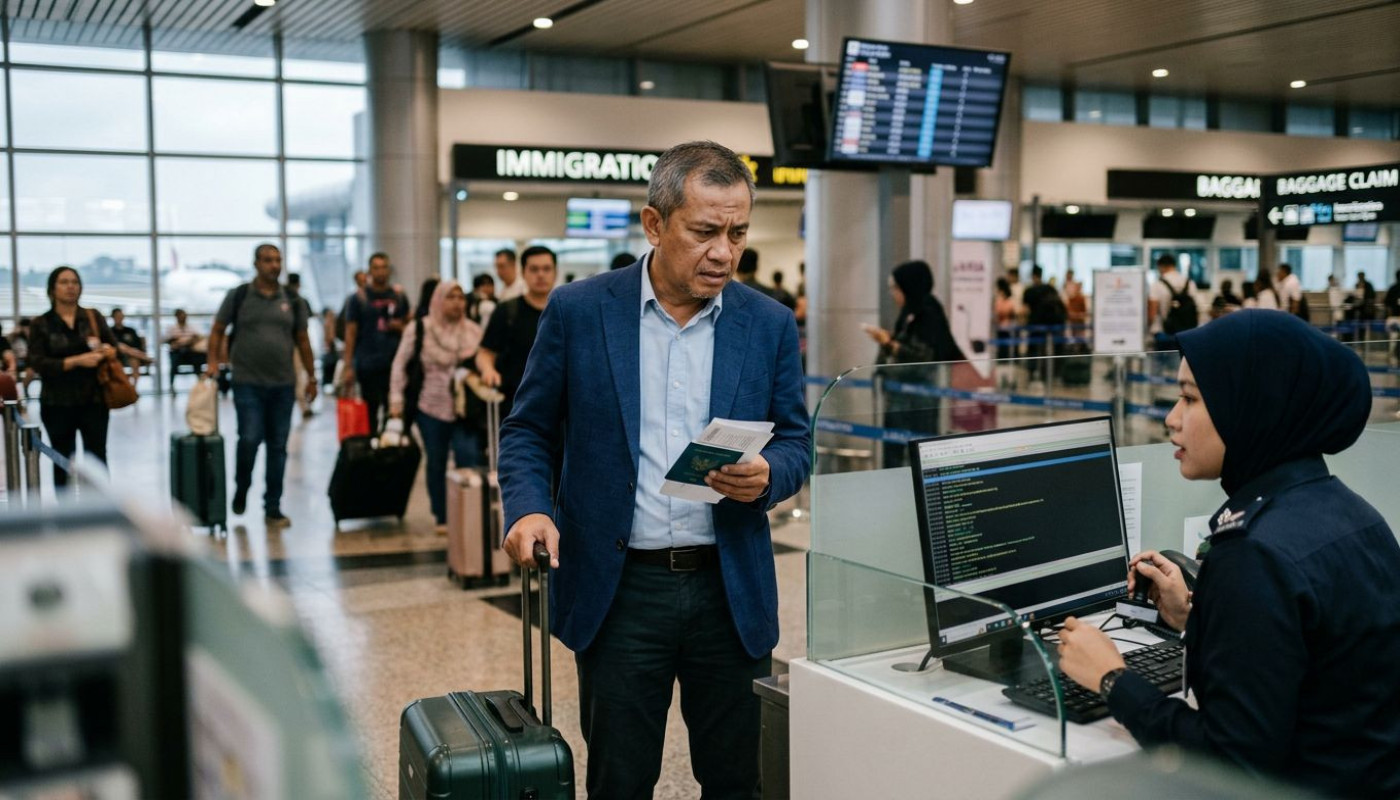
At the border, the drama looks instantaneous, but the decision-making rarely is. When a passport is scanned, databases can flag a notice, yet the officer still needs a legal pathway to act, and that pathway depends on national criminal procedure, bilateral treaties, and internal guidance. Some countries issue standing instructions that Red Notices should trigger detention only if the requesting state is ready to provide an extradition packet within a strict deadline, often 24 to 72 hours, while others allow longer periods but demand a judge’s authorization almost immediately. Miss the deadline, and the person may be released even though the notice remains active.
Membership in Interpol does not equal uniformity, and readers often underestimate how different “compliance” can look across jurisdictions. There are 196 member countries, but they do not share a single extradition law, nor do they interpret Interpol communications in the same way, and even within one country, practice can differ between an international airport, a land border, and a regional police unit. For those trying to understand the scope of the network, including which states are part of it, the country-by-country picture is laid out at thaiextradition.net, a reminder that the global map is broad, yet the legal mechanics remain stubbornly national.
Politics and diplomacy can be decisive, too, although they rarely appear in official statements. A country may be legally able to arrest but strategically reluctant if it anticipates a messy extradition fight, potential asylum claims, or diplomatic retaliation. Conversely, another state may be eager to detain quickly because it has a robust treaty relationship with the requesting country, because it trusts that country’s judiciary, or because it has domestic incentives to show toughness on crime. None of this requires a conspiracy, it is simply how sovereignty works, and it is why the same notice can mean “detain” in one capital and “monitor” in another.
What actually triggers detention at the border
Think a notice automatically lights up every system? Not necessarily. Interpol notices are distributed through channels such as I-24/7, but the way they are integrated into national databases varies, and the “hit” that appears on a border officer’s screen can depend on data synchronization, the category of notice, and how the person’s identity details match. A clean match on name, date of birth, and passport number may prompt immediate escalation, while a partial match can be treated as a lead that requires confirmation, and confirmation can take hours or days if the requesting country is asleep, unreachable, or slow to send documents.
Detention is also shaped by the type of notice and the underlying offense. Red Notices usually receive the most attention, but diffusion notices, which are sent directly by one country to others with Interpol’s channels, may be treated with more caution, and some states require higher thresholds before depriving someone of liberty. The alleged crime matters, too: violent offenses and organized crime cases often lead to quicker action, while financial crimes can produce slower, more procedural responses, especially if courts anticipate arguments about dual criminality, statute of limitations, or political motivation. Even where police detain, judges typically examine whether the alleged conduct is extraditable under local law, and whether the request meets human-rights standards.
Then there is the practical side that rarely makes it into viral posts: resources. Busy airports are triage environments, and if a hit is not crystal clear, officers may opt for secondary screening rather than a full arrest, particularly if detention space is limited or if the person is in transit and the airline is pressing for a decision. Add language barriers, missing translations, or uncertainty about whether the requesting country will formally seek extradition, and the “immediate arrest” many people expect can become a conditional, cautious process, sometimes ending with entry refusal, sometimes with release pending checks, and sometimes with a warrant being sought after the fact.
Why courts slow everything down, by design
Extradition is supposed to be hard. That friction is not a bug, it is a safeguard, and it is one reason an Interpol notice does not guarantee swift custody. Courts typically insist on due process: identity verification, legality of detention, review of extradition criteria, and, in many systems, an assessment of human-rights risks such as torture, unfair trial, or persecution. Those reviews take time, and they can expand dramatically if the case involves contested evidence, claims of political targeting, or allegations that the requesting state mischaracterized the offense.
Modern data protection and accountability mechanisms can add further delays. Interpol has tightened procedures for certain categories, including refugee-related protections under Article 3 considerations, and defense teams increasingly use administrative channels to challenge the data itself. Separately, domestic courts can scrutinize whether relying on a notice alone meets constitutional standards, and in some jurisdictions, higher courts have signaled discomfort with detentions that lack a domestic judicial order. The result is a patchwork: one state may accept the notice as a strong basis for provisional arrest, another may treat it as a warning requiring immediate judicial oversight, and another may demand a full extradition request before any deprivation of liberty.
Time also becomes leverage. Requesting states must often provide an extradition file within strict timelines, and if they miss them, the person can walk free, at least temporarily. That is why lawyers and authorities focus on logistics as much as law: certified copies, translations, diplomatic notes, and treaty-specific forms. It is also why a notice can loom over someone’s travel plans without producing a headline-grabbing arrest, because authorities may decide that the legal and diplomatic costs of acting, or the risk of losing in court, outweigh the immediate benefit of detention.
Planning travel, budgets, and next steps
Travelers facing uncertainty should plan early, check entry rules, and budget for legal advice and last-minute itinerary changes, because the biggest costs often come from disruption rather than detention. If a case is active, book flexible tickets, keep documentation organized, and understand that timing matters when authorities request papers. In some countries, legal aid may be available during detention, but preparation remains the safest investment.
Similar articles

Understanding The Impact Of LEI Numbers On Global Trade Security
Understanding The Impact Of LEI Numbers On Global Trade Security
